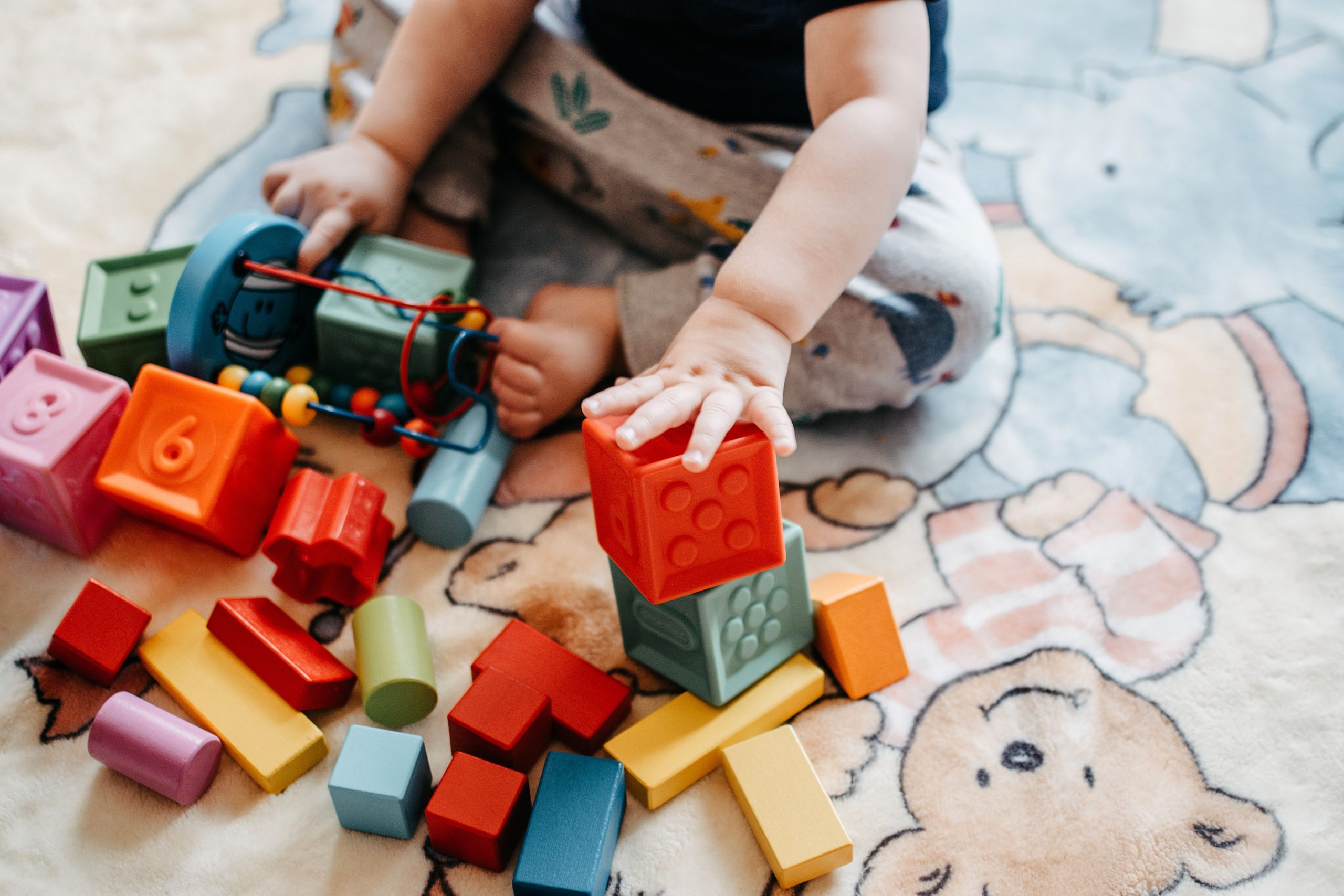
Tips to Organize a Messy Playroom
The easiest way to organize a messy playroom is to get rid of toys your children no longer use, give everything else a designated home, and make storage simple enough for kids to manage themselves. You don’t need an expensive organizing system or a room full of matching baskets. A few sturdy containers, accessible shelves, and a realistic cleanup routine can make a cluttered playroom much easier to maintain.
Whether you’re dealing with a dedicated playroom, a shared bedroom, or a corner of the living room, the same basic approach works: reduce the clutter first, organize what’s left, and create a system that fits how your children actually play.
1. Start by Sorting Everything Into Categories
Before buying storage bins or rearranging furniture, take inventory of what’s in the playroom. It’s difficult to organize toys when you don’t know how many you have or which ones your children still use.
Work on one section at a time rather than emptying the entire room onto the floor. Start with a toy box, a shelf, or one corner of the room. This keeps the mess manageable, especially if you have young children who want to play while you’re organizing.
Sort toys into five groups:
- Keep: Toys your children currently enjoy and use regularly.
- Donate or give away: Toys in good condition that your children have outgrown or no longer want.
- Store for later: Seasonal toys, age-appropriate toys you want to rotate, or items you’re saving for a younger sibling.
- Repair or complete: Toys with missing pieces that might be found, or items needing a simple repair.
- Discard or recycle: Broken, unsafe, or incomplete toys that cannot reasonably be repaired or used.
Keep a small basket nearby for puzzle pieces, blocks, and accessories that belong to sets elsewhere in the room. You can match them up once you’ve finished sorting.
For older children, involve them in deciding which toys to keep. Younger children may need more help, particularly when they want to hold on to everything they see. Avoid secretly getting rid of cherished belongings or making children give up toys they’re still attached to.
2. Get Rid of Toys That Are Taking Up Space
A playroom can only hold so much. If every shelf is overflowing and storage bins won’t close, adding more containers may simply hide the problem.
Look for toys that are no longer appropriate for your children’s ages, duplicates they rarely use, games that have been abandoned, and items that are consistently passed over in favor of other favorites.
Children often receive toys for birthdays, holidays, and other occasions, so clutter can build up gradually without anyone realizing it.
Don’t feel obligated to keep an unwanted toy just because it was expensive or a gift. If it’s in good condition, you may be able to pass it along to another family, donate it to an organization that accepts used toys, or sell it to recover some of the cost.
Check donation requirements before dropping anything off. Many organizations have restrictions on stuffed animals, incomplete games, electronic toys, or items that cannot be cleaned easily. Also check for product recalls before giving away children’s items, and never donate recalled toys unless an approved remedy has been completed.
3. Organize Toys by Type, Not Just by Size
Once you’ve decided what to keep, group similar toys together. This makes it easier for children to find what they want and understand where everything goes when they’re finished playing.
Useful playroom categories include:
- Building blocks and construction toys
- Cars, trucks, and toy vehicles
- Dolls, doll clothes, and accessories
- Stuffed animals
- Puzzles and board games
- Dress-up clothes and pretend-play accessories
- Art and craft supplies
- Books and quiet activities
There’s no need to create a separate container for every tiny category. If your child has only three toy cars, they may fit perfectly well with other small vehicles. If you have a large collection of building sets, you may want separate bins for different types so pieces don’t become mixed together.
Think about how your children naturally play. If they regularly use toy animals and building blocks together to create pretend farms or zoos, storing those collections near each other may make more sense than keeping them on opposite sides of the room.
4. Use Storage Containers You Already Have
One of the easiest ways to organize a playroom on a budget is to use containers you already own before purchasing anything new.
Small baskets can hold toy cars or doll accessories. Sturdy plastic bins work well for building blocks. An unused bookshelf can become a place for books, puzzles, and a few favorite toys.
You can also repurpose shallow drawers, washable fabric baskets, or appropriately sized containers from other rooms. Choose storage that’s sturdy, easy to clean, and suitable for your child’s age. Avoid containers with sharp edges, loose hardware, breakable materials, or small detachable parts that could become hazards.
Before buying more storage, measure the space and count how many containers you actually need. You might discover that decluttering has freed up enough room to use your existing shelves and baskets.
Budget tip: Matching containers can make a room look coordinated, but they don’t necessarily make it easier to organize. It’s more important that each container holds the right type of toy and that your children can use it safely.
5. Put Frequently Used Toys Where Kids Can Reach Them
A playroom is easier to keep tidy when children can get out their favorite toys and put them away without needing an adult to reach a high shelf.
Use low, accessible storage for toys your children play with every day. Place less frequently used items in higher storage areas that adults manage.
For example, a toddler’s stuffed animals and large building blocks might belong in lightweight floor-level bins, while art supplies requiring supervision can be stored out of reach.
Choose containers your child can handle without straining. A large toy box packed with heavy toys may be difficult to use, even if it’s technically within reach. Several smaller bins can be easier to manage than one enormous container.
Safety matters: Secure shelving units, dressers, and other furniture that could tip over if a child climbs or pulls on them. The U.S. Consumer Product Safety Commission’s Anchor It! campaign recommends anchoring furniture with shelves, drawers, or doors to the wall to reduce tip-over hazards. Keep heavy items low, and don’t place tempting toys where children might climb furniture to reach them.
6. Label Bins With Pictures for Younger Children
Labels make cleanup easier because everyone knows where toys belong. For toddlers and preschoolers who aren’t reading yet, picture labels are often more useful than words alone.
Take a photo of the toys that belong in each bin, print it, and attach it to the outside of the container. You can also draw simple pictures or cut images from old magazines.
For example, a picture of a toy truck marks the vehicle bin, while a drawing of a teddy bear identifies the stuffed animal basket.
If your children are learning to read, include both pictures and words. That way, the labels remain useful as their skills develop.
You don’t need a label maker or expensive supplies. Ordinary paper labels attached securely to containers can do the job. Keep tape, staples, and other fastening materials from becoming loose or accessible to very young children.
7. Create Simple Activity Areas
Even a small playroom can benefit from having different activities in predictable places.
You don’t need to divide the room with furniture or create elaborate themed stations. Simply grouping related items in convenient areas can help contain the mess.
- Reading corner: A comfortable floor cushion and a low, accessible book basket.
- Building area: Blocks and construction toys near an open section of floor.
- Pretend-play area: Dolls, toy kitchens, dress-up clothes, or other imaginative-play supplies.
- Art area: A washable work surface with age-appropriate supplies, with messy or potentially hazardous materials stored securely until an adult is supervising.
In a small room, one table might serve as both the art area and the puzzle station. A living room corner might have just a book basket and a bin of toys rather than separate activity zones.
Keep enough open floor space for children to play comfortably. A beautifully organized room won’t work well if storage furniture takes up all the usable space.
8. Rotate Toys Instead of Keeping Everything Out
If your children have more toys than the available space can comfortably hold, consider putting some away temporarily and bringing them back later.
Start by leaving out their most frequently used toys, along with a manageable selection of other activities. Store the remaining toys in clearly labeled containers somewhere safe and dry.
After a while, swap some of the less-used toys for ones you’ve stored. There’s no need to follow a strict weekly or monthly schedule. Rotate items when your children seem ready for a change or when you notice certain toys aren’t being used.
Avoid putting away comfort items, current favorites, or an important project without discussing it with your child. The idea is to reduce clutter, not make toys disappear unexpectedly.
This method is especially helpful when you’re organizing a playroom shared by children of different ages. You can keep some older children’s activities in a separate, inaccessible storage area until they’re ready to play with them safely.
9. Find Better Storage for Stuffed Animals
Stuffed animals can take up an enormous amount of room, even though most are lightweight. They also tend to migrate from bedrooms to couches, playrooms, and every other corner of the house.
A large, lightweight basket or an accessible open bin can provide a simple home for the collection. If your child has many stuffed animals, consider keeping current favorites available and storing less-used ones separately.
Choose storage that lets your child retrieve animals without climbing or pulling down heavy containers. Avoid loosely installed hanging nets or makeshift hammocks with accessible cords, especially in rooms used by toddlers. Keep hanging storage and cords away from cribs and other sleeping spaces.
You can also make a stuffed animal cleanup game by asking your child to return the animals to their beds at the end of the day.
10. Keep Small Toy Pieces Together
Small pieces are some of the biggest contributors to playroom clutter. Puzzle pieces, doll shoes, miniature accessories, and construction sets can easily get mixed together.
Use appropriately sized containers to keep complete sets together. Small divided organizers can work for older children’s collections, while larger pieces may fit better in ordinary bins.
For board games or puzzles, check that all pieces are present before returning them to storage. If the original box is damaged, an alternative container with a picture of the completed puzzle or game can make the set easier to identify.
Be careful with small pieces when younger siblings share the room. Items that are appropriate for an older child may be choking hazards for babies and toddlers. Store them securely out of reach and supervise activities involving small parts. Don’t assume that putting them in a separate open bin makes them safe.
11. Give Art Supplies Their Own Storage Space
Crayons, coloring books, paper, stickers, and craft materials can quickly become scattered across a playroom if they don’t have a designated home.
Use a shallow container for coloring books and paper, along with separate organizers for crayons and other age-appropriate materials. If space is limited, a portable art caddy can be useful because you can move it to the kitchen table and put it away afterward.
Store paints, scissors, glue, small beads, and other materials according to the child’s age and the product’s instructions. Items that require adult supervision should not be freely accessible to young children.
Sort through finished artwork occasionally rather than letting every drawing pile up indefinitely. You might display a few favorites, save selected pieces in a folder, or photograph artwork that your child is happy to part with.
12. Make Cleanup Part of the Daily Routine
Even a carefully organized playroom will become messy again if there isn’t a simple way to put things back.
Choose a natural point in the day for cleanup, such as before dinner, before bedtime, or before moving to another activity. A familiar cleanup song or a short reminder can help children know what to expect.
The Centers for Disease Control and Prevention recommends keeping routines consistent, predictable, and appropriate for a child’s abilities. A simple cleanup routine can be one part of that daily structure.
Give specific instructions instead of telling a young child to clean the entire room. For example, say, “Please put the cars in the red bin,” then offer the next task once that’s finished. The CDC’s guidance on giving directions emphasizes short, clear instructions that tell children exactly what to do.
For younger toddlers, cleanup might mean placing a few blocks in a basket while you do the rest. Older children can gradually take responsibility for more of the room, depending on their abilities.
It can also help to clean up one activity before starting another. You don’t have to enforce this every time, particularly during imaginative play that uses several toy sets together, but it can prevent every container from being emptied at once.
How to Organize a Small Playroom
If your children don’t have a dedicated playroom, focus on limiting how much is stored in the available space.
In a shared bedroom, a low shelf and a few bins may be enough. In a living room, you might use one designated cabinet or a small collection of baskets that can be put away when playtime ends.
Look for opportunities to use existing furniture rather than filling the room with more storage units. Shelves can hold both books and toys, and a sturdy bench designed with safe storage compartments can serve more than one purpose.
Don’t overcrowd the space with tall shelving simply to gain more storage. Any suitable furniture that could tip needs to be securely anchored, and children should not need to climb to reach their belongings.
In very small spaces, toy rotation can make the biggest difference. Keep enough toys available for interesting play without trying to display every toy your family owns.
How to Organize a Playroom for Kids of Different Ages
Shared playrooms are especially challenging when one child is a toddler and another enjoys toys with small parts.
Give each child a clearly identified place for personal favorites, along with shared storage for toys everyone can safely use. Picture labels can help younger children recognize their belongings, while older children may prefer labeled drawers or containers for their collections.
Keep small building pieces, craft supplies, and other age-restricted items in storage that younger children cannot access. Older siblings may need a separate table or play area where these activities can be used with appropriate supervision.
It’s also reasonable to have a few toys that belong to one child rather than requiring everything to be shared. Clear expectations can help avoid arguments over special belongings.
A Simple Playroom Organization Plan You Can Finish in Stages
If the playroom feels overwhelming, you don’t have to organize everything in one afternoon. Divide the project into manageable sessions.
- First session: Remove trash, broken toys, packaging, and items that belong in other rooms. Set aside anything that may be unsafe.
- Second session: Sort toys into categories and decide which to keep, donate, store, or repair.
- Third session: Match the toys you’re keeping with available baskets, bins, and shelves. Put frequently used items in accessible places.
- Fourth session: Add picture labels, separate age-restricted items, secure appropriate furniture, and create a simple cleanup routine.
Once you’ve finished, give the new system a little time before deciding whether it works. Watch where your children naturally play, which toys are difficult to put away, and which bins become cluttered again.
If your child repeatedly leaves the same toys on the floor, the storage location may be inconvenient or the category may be confusing. Moving the bin closer to where the toys are used can be more effective than repeatedly reminding your child to clean up.
How to Keep a Playroom Organized Without Constantly Cleaning
The most practical playroom organization system isn’t necessarily the one that looks best in pictures. It’s the one your family can maintain during ordinary busy days.
Leave a little extra room in containers so children aren’t struggling to force toys into overflowing bins. Revisit the toys occasionally as your children grow and their interests change. Before birthdays or holidays, consider making space for new items rather than automatically adding more storage.
Most importantly, allow the room to be used for its intended purpose. Building forts, spreading out puzzles, and creating elaborate pretend-play scenes will naturally make a mess. That doesn’t mean the organization system has failed.
A successful playroom has enough space for children to play, a safe and sensible place for their belongings, and a cleanup routine that doesn’t require a major effort every evening. You can achieve that with ordinary household containers and a little planning, without spending a fortune on storage furniture.
Related Posts:
 Hide your messy bulletin boards
- Make goopy goop for messy fun
 Playroom & Toy Closets - Squeaky Clean Challenge Day 29
- Why you should get rid of the big toy box in your playroom
 Using freezer baskets to organize your freezer meals
- Freezer Meal Magic: Organize Your Weekly Plans Like a Pro
 Brighten Your Space: Budget-Friendly Room Makeover Tips
 Easy Pet Hair Removal Tips From Furniture


