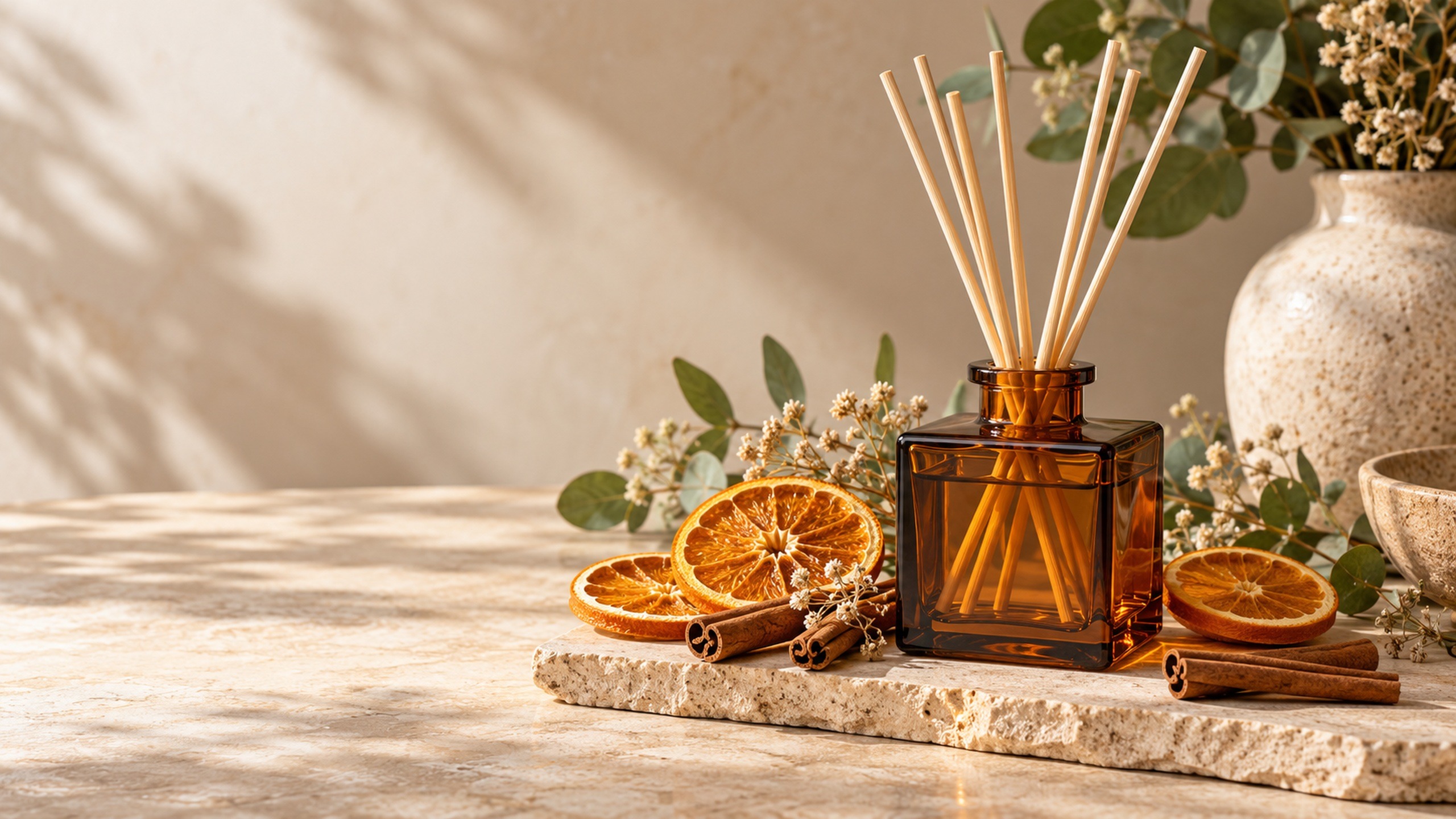
12 Lavender Essential Oil Blends that Smell Like Relaxation
Lavender can smell quite different depending on what you pair it with. Citrus gives it a brighter edge, cedarwood brings a dry woody note, and geranium or ylang ylang creates a fuller floral scent. These 12 combinations offer starting points for choosing a fragrance you enjoy during a quiet evening, a reading break or time spent unwinding.
Here, “relaxation” describes the atmosphere you might associate with a scent. These blends aren’t treatments for anxiety or insomnia: NCCIH says the benefits of lavender aromatherapy for stress, anxiety and sleep remain unclear.
How to use these blending ideas
These are suggested fragrance ratios for adult home diffusion, not tested therapeutic formulas or instructions for skin, bath or food use. Choose products whose labels permit diffusion and check that your device accepts each ingredient. For lavender, look for Lavandula angustifolia on the label; record the botanical names of the other oils you use so you can reproduce a combination you like.
A ratio is not a diffuser dose. To make a small concentrate, you can treat one part as one drop and combine the listed amounts in a clean, dry glass bottle suitable for essential oils. Cap it, gently mix and label it with the ingredients and date. Drop sizes vary, so this is an approximate home blending method, not a precise formulation.
Use only the amount of that concentrate permitted by both the product labels and your diffuser instructions, starting at the lower end of any recommended range. Don’t automatically empty the whole mixture into the diffuser. If an ingredient’s directions are incompatible with this use, choose another blend rather than improvising.
Diffuse intermittently in a ventilated room while you’re awake, rather than continuously or overnight. Stop if the scent causes coughing, headache or irritation. The Tisserand Institute recommends intermittent rather than continuous diffusion.
12 blends to choose from
1. Lavender Lullaby
Ratio: 4 parts lavender, 3 parts Roman chamomile and 2 parts cedarwood.
A floral-and-wood combination with chamomile’s distinctive herbal sweetness. Choose this if you prefer a rounded fragrance without citrus or mint. Despite its name, it’s an evening scent idea, not a sleep remedy or an infant blend.
2. Lavender Lemonade
Ratio: 4 parts lemon, 3 parts lavender, 2 parts grapefruit and 1 part spearmint.
This is a citrus-led blend, with lavender in the background and a small mint accent. It suits someone who finds straight lavender too floral. The lemonade name describes the fragrance only; don’t add these oils to drinks.
3. Herb Garden Calm
Ratio: 3 parts lavender, 3 parts rosemary, 2 parts basil and 1 part clary sage.
A distinctly herbal option for people who enjoy the smell of an herb garden more than a bouquet. Rosemary and basil give it a sharper character. Check the exact species and product directions, since oils sold under these common names can differ.
4. Field of Dreams
Ratio: 5 parts lavender, 3 parts geranium and 1 part bergamot.
Lavender leads this blend, with geranium adding a rosy floral note and bergamot providing a little citrus contrast. It’s a straightforward choice when you want lavender to remain recognizable rather than disappear behind stronger ingredients.
5. Cloud Nine
Ratio: 4 parts lavender, 3 parts sweet orange, 2 parts ylang ylang and 1 part frankincense.
A sweet floral direction with citrus and a resinous base. Ylang ylang can be prominent, so choose this if you enjoy richer floral fragrances. For a lighter first experiment, use 1 part ylang ylang instead of 2.
6. Woodland Lavender
Ratio: 4 parts lavender, 3 parts cedarwood, 2 parts vetiver and 1 part patchouli.
The earthy choice in the collection. Vetiver and patchouli make this a heavier fragrance than the citrus blends. If you’re new to those oils, try 1 part vetiver initially; check your device’s compatibility with thicker oils before using the mixture.
7. Lavender Blossom Breeze
Ratio: 4 parts lavender, 2 parts sweet orange, 1 part ylang ylang and 1 part geranium.
A floral blend with a citrus opening and no woody base. Try this if you like geranium but want it to share the spotlight. The small amount of ylang ylang adds a different floral note without making it the largest part of the mixture.
8. Cozy Lavender and Cedar
Ratio: 4 parts lavender, 3 parts sweet orange and 2 parts cedarwood.
A simple three-oil combination for someone who wants a warmer scent without a heavy floral blend. Sweet orange balances the dry wood note. This is a practical place to start if you already own lavender and want to buy only a couple of additional oils.
9. Spa Serenity
Ratio: 4 parts lavender, 3 parts eucalyptus, 2 parts tea tree and 1 part bergamot.
A sharper, medicinal-smelling blend rather than a sweet one. Choose it for its fragrance, not to disinfect a room or treat congestion. Eucalyptus and tea tree are distinctive, so this won’t suit someone who dislikes those scents on their own.
10. Sunrise Calm
Ratio: 4 parts lavender, 3 parts sweet orange, 2 parts lemon and 1 part peppermint.
Sweet citrus and peppermint give lavender a fresher direction. Keep peppermint to the small proportion shown rather than adding more to intensify the whole fragrance. Pick this when you want a mint accent; choose Cozy Lavender and Cedar if you prefer warmth.
11. Meditation Woods
Ratio: 4 parts lavender, 3 parts frankincense, 2 parts sandalwood and 1 part myrrh.
A woody, resinous combination without citrus or mint. It offers a different direction from Woodland Lavender’s earthier vetiver and patchouli. Check the product form and diffuser instructions carefully, particularly for thick or resinous materials.
12. Sweet Lavender Citrus
Ratio: 4 parts lavender, 3 parts sweet orange, 2 parts lemon and 1 part ylang ylang.
This has the same citrus foundation as Sunrise Calm, with a floral accent in place of peppermint. It’s a useful comparison if you’re deciding whether you prefer lavender paired with mint or richer flowers.
Keep fragrance experiments separate from bath and body recipes
Don’t swallow these mixtures, apply them undiluted, add them to bathwater or turn them into pillow sprays by mixing them with water. Essential oils do not disperse evenly in water; the Tisserand Institute warns that undispersed bath oils can contact skin in concentrated droplets. A diffuser ratio is not a skin-safe dilution or a finished cosmetic formula.
Keep bottles and diffuser liquids secured away from children and pets. Poison Control notes that essential oils can be poisonous when misused. For accidental swallowing or a significant exposure, contact your local poison center promptly.
These mixtures aren’t formulated for babies or children. If you’re pregnant, breastfeeding, have asthma or another respiratory condition, or react to fragrances, get individual advice from a qualified health professional before using them. A fragrance-free room is a sensible option.
Check with your veterinarian before diffusing around pets. The ASPCA advises avoiding essential oil diffusers in homes with birds and notes additional concerns for pets with breathing problems. Never apply these blends to an animal.
Start with one blend
You don’t need every oil in this collection. Choose a blend that uses what you already have, make a small amount and record the ingredients. Change only one proportion at a time so you can tell what you prefer. If a mixture smells too strong in the room, reduce the amount used within the device’s instructions rather than adding more ingredients.
Related Posts:
 26 Irresistible Summer Essential Oil Blends That…
 10 Hawaii-Inspired Essential Oil Blends That Smell…
 15 Beach-Inspired Essential Oil Blends That Smell…
 Easy stove-top recipe to make your house smell like…
 Harmonizing Stress Away: The Power of Music for Relaxation
 Ultimate Relaxation: Fresh Mint Bath Bliss Recipe
 Removing onion smell from your hands after chopping onions
 Removing the smell of paint from hands after painting