12 Japanese Tea House Inspired Essential Oil Blends for Understated Elegance
Wood, citrus, and small accents of ginger shape these 12 essential oil blends inspired by Japanese tea house settings. Their names draw on simple details: light through a paper screen, a ceramic cup, a timber veranda, and a path across a courtyard.
These are contemporary room-fragrance ideas, not traditional Japanese tea ceremony recipes. For a wood-focused combination, start with Stone Basin. Choose Courtyard Pebbles for citrus, or Tea Tray Shadows for woods with a ginger accent. None contains tea, and none is intended to flavor a drink.
Using the blends in a diffuser
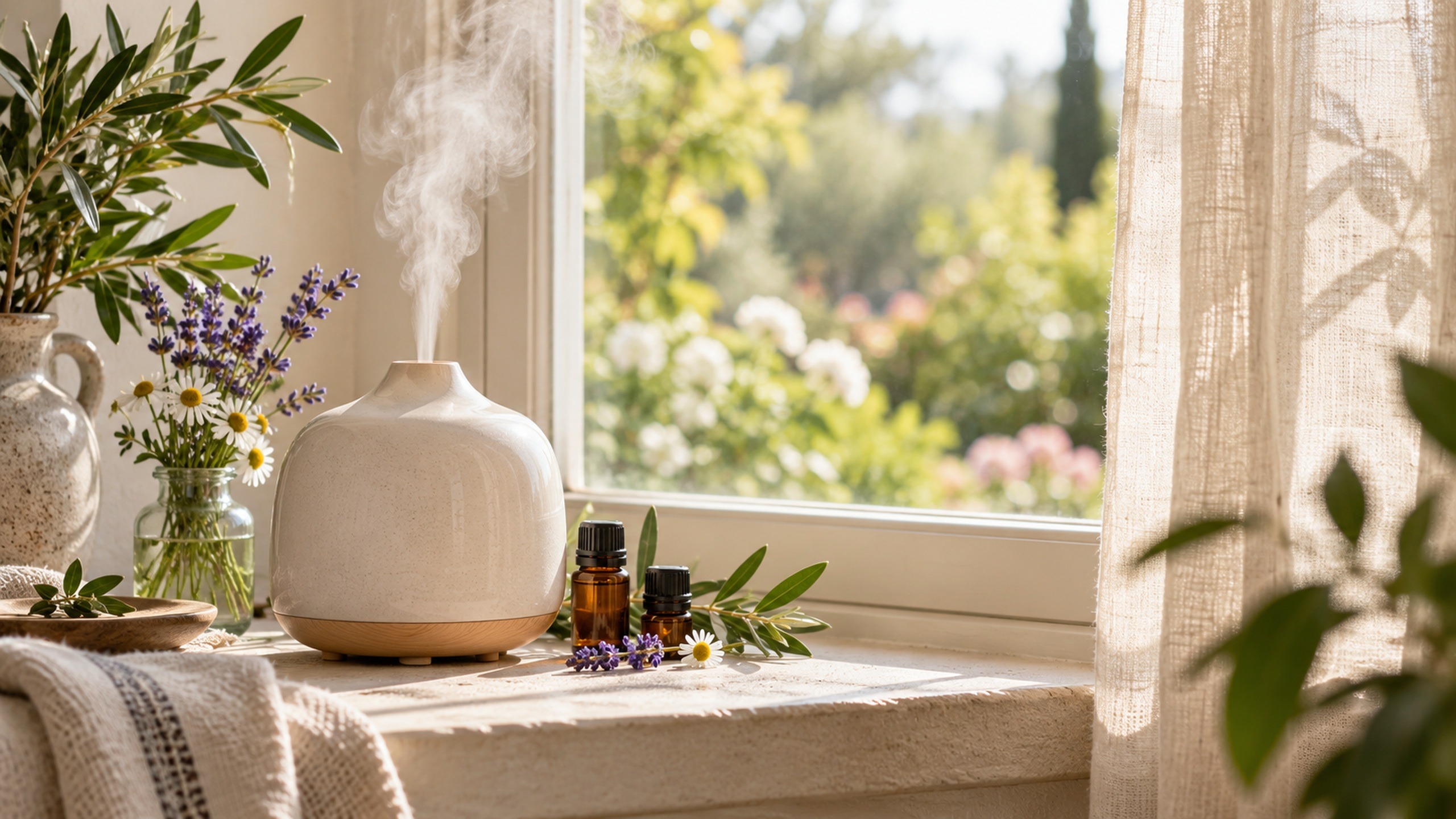
The listed drops describe each blend’s proportions, not a universal diffuser dose. Use a device designed for essential oils, and follow both its instructions and the oil suppliers’ directions for quantity, water level, and operating time.
If the full recipe exceeds your diffuser’s recommended amount, combine the listed drops in a small, clean glass bottle suitable for essential oils. Cap and gently swirl it, then use only the permitted amount of the mixture. Label any remainder with the ingredients and date and store it securely. Don’t try to measure fractions of a drop or increase the amount just to make the fragrance stronger.
Check product labels before mixing. Use Australian sandalwood, Atlas cedarwood, and ho wood as specified, and record the botanical names and suppliers of your oils. Don’t assume similarly named oils or products diluted in carrier oil are interchangeable or suitable for your diffuser. The scent will vary with the products you use.
12 tea house inspired blend recipes
- Paper Screen Light
2 drops Atlas cedarwood essential oil
2 drops Mandarin essential oil
1 drop Cypress essential oil
Cedarwood and mandarin share the lead, with cypress as an accent. The inspiration is a rectangle of afternoon light falling across a wooden floor. - Stone Basin
2 drops Australian sandalwood essential oil
2 drops Cypress essential oil
1 drop Atlas cedarwood essential oil
A wood-focused combination without citrus or ginger, named for a stone basin beside a garden path. - Tea Tray Shadows
2 drops Ho wood essential oil
2 drops Australian sandalwood essential oil
1 drop Ginger essential oil
Ho wood and sandalwood form the center, with ginger adding a spicy accent. Picture a small tray and the shadows cast by a cup and teapot. - Timber Veranda
2 drops Bergamot essential oil
1 drop Atlas cedarwood essential oil
1 drop Mandarin essential oil
1 drop Cypress essential oil
Bergamot and mandarin bring citrus to the cedarwood-and-cypress pairing, taking inspiration from a veranda opening onto a garden. - Folded Linen
2 drops Ho wood essential oil
2 drops Australian sandalwood essential oil
1 drop Cypress essential oil
This variation on Tea Tray Shadows replaces ginger with cypress. Choose it when you’d like to explore the same two woods without the spice accent. - Small Ceramic Cup
2 drops Australian sandalwood essential oil
2 drops Cypress essential oil
1 drop Ginger essential oil
Sandalwood and cypress meet a little ginger in a blend named for the small details of a handmade cup: its shape, glaze, and place on the tray. - Garden Stepping Stones
2 drops Atlas cedarwood essential oil
2 drops Mandarin essential oil
1 drop Australian sandalwood essential oil
A cedarwood-and-mandarin combination with sandalwood in the supporting role. Compare it with Paper Screen Light to explore sandalwood versus cypress. - Sliding Door
2 drops Bergamot essential oil
1 drop Ho wood essential oil
1 drop Atlas cedarwood essential oil
1 drop Australian sandalwood essential oil
Bergamot accompanies three wood oils in this recipe, inspired by a doorway framing a view of the garden. - Bamboo Blind
2 drops Mandarin essential oil
2 drops Cypress essential oil
1 drop Ginger essential oil
Mandarin, cypress, and ginger offer a citrus-and-spice direction. The bamboo name describes the setting; there is no bamboo ingredient in the blend. - Courtyard Pebbles
2 drops Bergamot essential oil
2 drops Mandarin essential oil
1 drop Australian sandalwood essential oil
Two citrus oils take the largest share, with sandalwood as an accent. Try this one if citrus is usually your first choice. - Rain Chain
2 drops Mandarin essential oil
2 drops Cypress essential oil
1 drop Australian sandalwood essential oil
This combination keeps the mandarin and cypress of Bamboo Blind but uses sandalwood instead of ginger. Its name evokes rain tracing a path from the eaves. - Lantern at the Threshold
2 drops Ho wood essential oil
1 drop Atlas cedarwood essential oil
1 drop Australian sandalwood essential oil
1 drop Mandarin essential oil
Ho wood takes the largest share, joined by cedarwood, sandalwood, and a mandarin accent. Imagine a lantern marking the entrance as daylight fades.
Keep the fragrance in the background
Choose one blend at a time rather than running several fragrances together. If you’re serving tea and want to concentrate on its aroma, leave the diffuser off during tasting. Keep oils and diffuser mist away from cups, kettles, tea leaves, and food-preparation surfaces.
The blend names aren’t application instructions: don’t drip the mixtures onto linens, paper screens, wood, or ceramics. Use them only in an appropriate diffuser, placed according to its instructions.
You can begin with just three oils. If you already have cedarwood, mandarin, and cypress, try Paper Screen Light. If you own sandalwood, cypress, and ginger, start with Small Ceramic Cup. Record the products and diffuser amount you used before deciding whether to buy another oil or make a larger batch.
Essential oil precautions
Diffuse intermittently with fresh-air exchange, following the Tisserand Institute’s guidance on essential oil use. Stop if the scent causes discomfort, and check that others sharing the room are comfortable with fragrance. If you’re pregnant, have asthma, or have another condition that could affect suitability, seek individual medical guidance first. These recipes aren’t formulated for babies or young children.
Don’t ingest these mixtures, add them to tea, apply them undiluted to skin, or pour them directly into bathwater. Keep oils away from flames and store bottles and filled diffusers out of children’s and pets’ reach. If an oil is swallowed, contact your local poison center promptly; Poison Control explains the risks of essential oil misuse.
Ask your veterinarian about diffuser use if you have pets, especially animals with breathing problems. Don’t apply these oils to animals or their bedding. The ASPCA advises avoiding essential oil diffusers in homes with birds.
Related Posts:
 12 Garden Wedding Inspired Essential Oil Blends for…
 10 Hawaii-Inspired Essential Oil Blends That Smell…
 12 Zodiac-Inspired Essential Oil Blends for Star Sign Style
 12 Wildflower Meadow Inspired Essential Oil Blends…
 12 Orchard Walk Inspired Essential Oil Blends for…
 12 Mountain Hiking Inspired Essential Oil Blends for…
 12 Moroccan Riad Inspired Essential Oil Blends for a…
 12 Holiday Baking Inspired Essential Oil Blends for…